
Sri Lanka is an island that refuses to be rushed. From the mist-shrouded tea plantations of the Central Highlands to the sun-drenched golden sands of the southern coast, this teardrop-shaped nation packs an impossible amount of diversity into a relatively compact space. While the country’s iconic blue trains are famous worldwide, they confine you to a fixed track. To truly experience the heartbeat of the island—to stop for a fresh king coconut by the roadside, discover an empty waterfall, or change your plans on a whim—you need your own set of wheels.
A self-drive road trip through Sri Lanka is an adventure in the truest sense of the word. It challenges your senses, rewards your curiosity, and opens doors to cultural encounters that ordinary tourists miss entirely.
Navigating the Beautiful Chaos: The Reality of Sri Lankan Roads
Before you turn the ignition key, it is crucial to understand that driving in Sri Lanka is a unique cultural experience. On paper, traffic moves on the left side of the road. In reality, traffic moves wherever there is an open square inch of asphalt.
The road hierarchy is governed by an unwritten rule of size: buses always have the right of way, followed by heavy trucks, standard cars, tuk-tuks, and finally, brave pedestrians and wandering wildlife. Horn blowing is not a sign of anger here; it is a vital communication tool used to say, “I am overtaking you,” or “Please look out, I am around the corner.”
Once you leave the bustling urban sprawl of Colombo and get onto the modern Southern Expressway or the scenic rural routes, the driving experience transforms completely. The chaotic city traffic gives way to winding mountain roads lined with giant ferns, or long, straight coastal highways shaded by overhanging palm trees.
The Cultural Triangle and the Emerald Highlands
A classic Sri Lankan road trip itinerary usually heads north from the capital into the Cultural Triangle before climbing into the cool mountain country. Driving yourself allows you to base yourself in a quiet village near Sigiriya, wake up before dawn, and beat the tour buses to the top of the ancient Lion Rock fortress. From there, you can easily cruise over to the ancient city of Polonnaruwa, exploring the scattered stone ruins by car at your own comfortable pace.
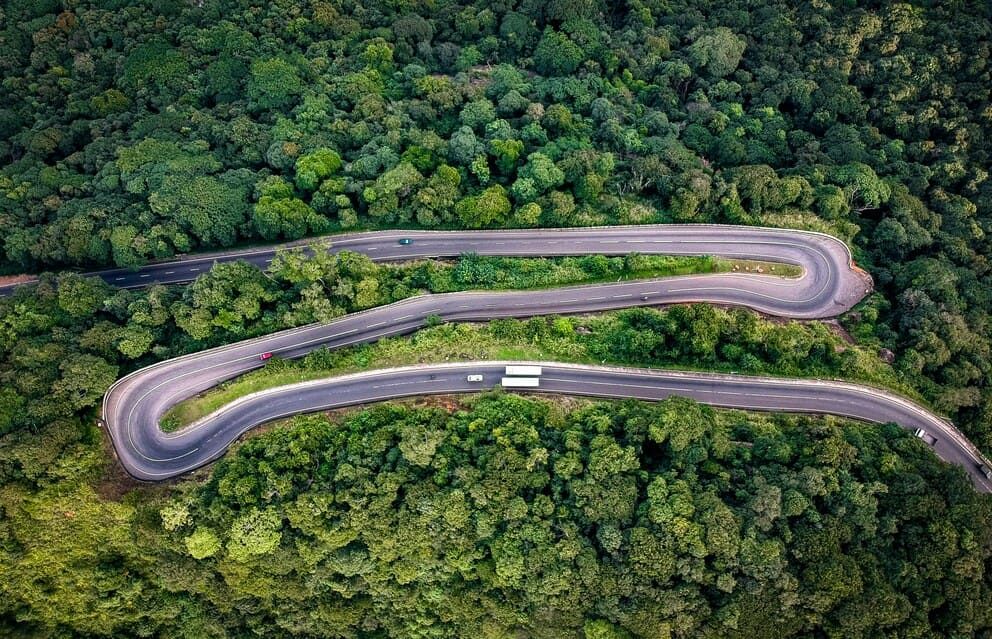
As you point your vehicle south toward Kandy and Nuwara Eliya, the landscape undergoes a dramatic shift. The dry plains disappear, replaced by endless cascading waves of emerald-green tea estates. The roads here become narrow ribbons that hug the edges of misty mountains.
Driving through the highlands requires focus—you will frequently share hairpin turns with local buses—but the reward is unmatched. You can pull over at independent tea factories, sample fresh orange pekoe tea right where it was grown, and photograph dramatic drops into deep valleys without waiting for a tour group.
Off the Beaten Track: The Kegalle and Hatton Transition
Most standard travel itineraries push tourists directly from Colombo to Kandy along the main highway, missing the subtle, authentic transition zones that showcase real Sri Lankan life. If you take the scenic route through the Sabaragamuwa Province, you will pass through towns like Kegalle, famous for its lush spice gardens, rubber plantations, and elephant sanctuaries.
Stopping in these secondary transit hubs gives you a taste of local hospitality untouched by mass tourism. It is highly recommended to arrange your transport logistics ahead of time so you don’t waste precious daylight. Many travelers choose to pick up their vehicles right at the international airport, but if you are planning an unconventional route through the interior, utilizing professional car rental services in Kegalle or having a vehicle delivered to a regional hub is a brilliant way to save time and skip the heavy Colombo traffic.
From the rubber estates of Kegalle, the road climbs steeply toward Hatton and the Peak Wilderness Sanctuary. This is the gateway to Adam’s Peak, the sacred mountain climbed by thousands of pilgrims every year. Having your own car in this region is a massive advantage, as public transport between remote tea plantation bungalows and hiking trailheads can be sparse and unpredictable.
Cruising the Wild South and Coastal Highways
No road trip around the island is complete without experiencing the wild south. As you descend from the hills toward Yala or Udawalawe National Parks, the pine trees turn into dry scrublands. Driving your own vehicle to the gates of these parks gives you total flexibility over your safari schedule.
Finally, hit the coastal highway heading west toward the historic colonial city of Galle. This stretch of road is pure tropical bliss. To your left, the Indian Ocean crashes against the shore; to your right, local fishermen sell their daily catch from makeshift wooden stalls. You can stop at secret surf breaks in Hiriketiya, watch the famous stilt fishermen in Weligama, or spend an afternoon exploring the thick stone ramparts of the 16th-century Galle Fort.
Essential Survival Tips for Your Sri Lankan Self-Drive Adventure
To ensure your road trip is memorable for all the right reasons, keep these practical tips in mind:
- Secure the Right Paperwork: To drive legally in Sri Lanka, a standard International Driving Permit (IDP) is not enough on its own. It must be endorsed by the Automobile Association of Sri Lanka (AA) in Colombo. Most reputable rental agencies can arrange this endorsement for you in advance for a small fee.
- Download Offline Maps: While cellular coverage is generally excellent across the island, connection can drop in deep mountain valleys or dense jungle areas. Download Google Maps or Maps.me for the entire island before you set off.
- Avoid Night Driving: Outside of major highways, street lighting can be non-existent. Cows, dogs, elephants, and unlit tuk-tuks frequently appear on rural roads after dark. It is best to plan your drives so you reach your destination before sunset.
- Keep Cash Handy: While credit cards are widely accepted in Colombo and coastal resorts, small-town gas stations, toll roads, and roadside fruit stalls operate strictly on Sri Lankan Rupees.
An island road trip strips away the protective barrier of traditional tourism. When you steer your own path through places like Kegalle, the highlands, and the southern coast, you cease to be just an observer. You become an active participant in the beautiful, vibrant daily rhythm of Sri Lanka.