
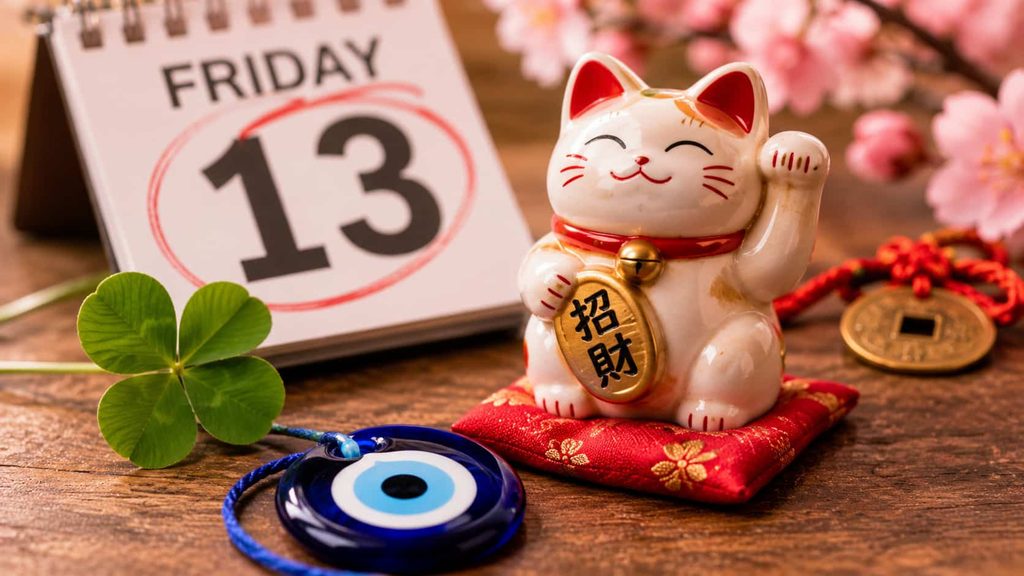
Have you ever walked under a ladder, spotted a black cat, or opened an umbrella indoors and briefly wondered whether you’ve just invited a lifetime of bad luck? Even if you don’t consider yourself superstitious, chances are you’ve picked up a few little habits over the years. Maybe you knock on wood before something important, avoid walking under ladders, or refuse to say something good out loud in case you accidentally jinx it.
But here’s something interesting: not everyone around the world worries about the same things. A number that makes someone nervous in one country might be considered lucky somewhere else. A harmless everyday gesture could mean something completely different depending on where you are. And some superstitions are so oddly specific that you might wonder how they ever became a thing in the first place.
Superstitions are a fascinating part of culture because they reveal the stories, traditions, fears, and beliefs that people carry with them. So let’s take a little trip around the world and explore some of the most interesting ones.
Friday the 13th Isn’t Unlucky Everywhere
For many people in North America, Friday the 13th is practically synonymous with bad luck. Some people avoid making big plans, others blame every minor inconvenience on the date, and a few might prefer to stay home altogether.
But travel to Spain or Greece and you’ll discover that Tuesday the 13th is traditionally considered the unlucky day instead. In Italy, it’s Friday the 17th that has the unfortunate reputation. One explanation comes from the Roman numeral XVII, which can be rearranged to spell VIXI, a Latin expression meaning “I have lived,” associated with death.
Meanwhile, the number four is particularly unlucky in countries such as China, Japan, and South Korea because its pronunciation resembles the word for death. This is why some buildings and hotels avoid using the number four for room numbers or floors.
Suddenly, Friday the 13th doesn’t seem quite so universally terrifying. Folklife Today+2
The Evil Eye: When a Compliment Becomes Suspicious
Have you ever received a compliment and immediately felt the need to knock on wood? In various cultures, there’s a belief that excessive admiration or envy can bring someone misfortune. This idea is commonly associated with the evil eye.
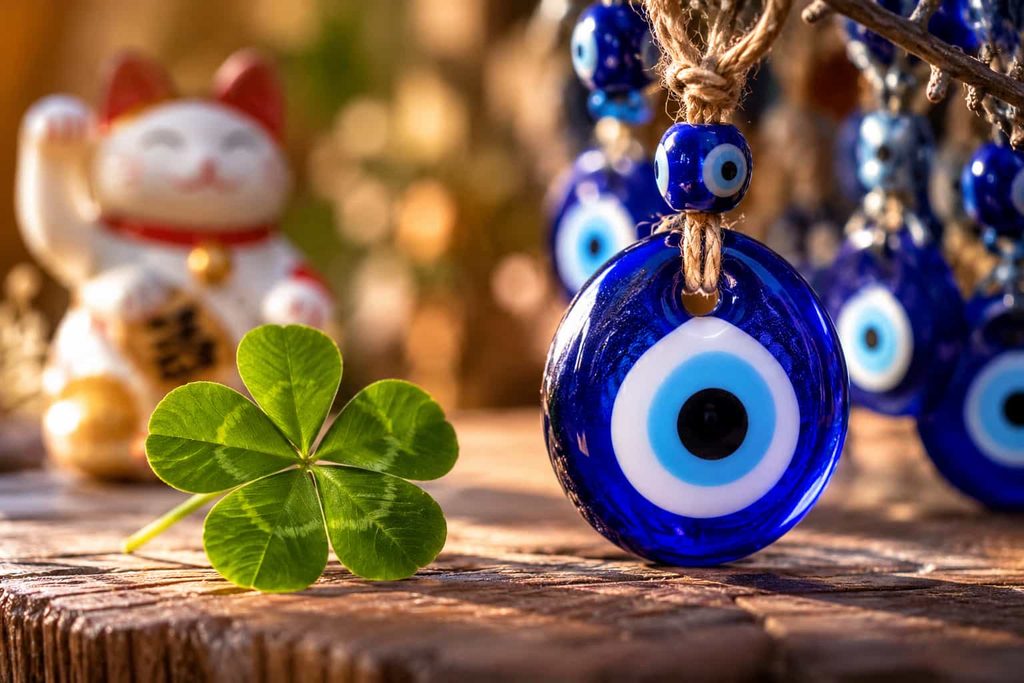
The evil eye is a belief found across parts of the Mediterranean, the Middle East, North Africa, and beyond. It’s often represented by a blue eye-shaped charm called a nazar, which is believed to protect against negative energy or jealousy.
You’ll find these little blue charms hanging in shops, homes, cars, and even worn as jewellery. In Turkey, they’re especially recognizable and have become a familiar part of the country’s decorative culture.
The interesting part is that the evil eye isn’t necessarily about someone deliberately wishing you harm. In some traditions, even an innocent compliment can attract unwanted attention or envy. So if someone admires your new outfit a little too enthusiastically, perhaps a protective charm doesn’t seem like such a bad idea. Google Arts & Culture+1
Four-Leaf Clovers, Lucky Numbers, and Other Good Omens
Of course, superstitions aren’t all about avoiding disaster. Plenty of traditions revolve around attracting good fortune.
In Ireland and other parts of the world, finding a four-leaf clover is considered lucky. Since most clovers have three leaves, discovering one with four is relatively unusual, which probably helps explain its reputation as a special find.
In China, the number eight is associated with prosperity and wealth because its pronunciation resembles a word associated with getting rich. It’s considered especially fortunate in certain business and celebratory contexts. This is one reason the number can be particularly desirable in phone numbers, addresses, and important dates.
Brazil has its own New Year’s tradition involving lentils. Eating them as the year begins is believed to bring prosperity and financial luck. Their small, round shape is often associated with coins, making them a fitting food for anyone hoping to start the year with a little extra abundance.
Whether it’s a lucky clover, a special number, or a bowl of lentils, people everywhere seem to enjoy finding small ways to invite a little good fortune into their lives. Smithsonian Institution+1
Some Superstitions Are Surprisingly Specific
Some cultural beliefs are so specific that they deserve their own category.
In Japan, one well-known superstition warns against sleeping with your head pointing north. This is associated with funeral customs, where the deceased may be laid with their head facing north. As a result, some people avoid sleeping that way themselves.
In South Korea, there’s a widely known superstition that sleeping with an electric fan running in a closed room can be dangerous. The belief became so familiar that some electric fans have historically included timers, although the supposed danger itself isn’t supported by scientific evidence.
And in Turkey, there’s a traditional belief that chewing gum at night is like chewing the flesh of the dead. It’s certainly a memorable reason to put the gum away before bedtime.
These beliefs might sound unusual to someone unfamiliar with them, but that’s part of what makes cultural traditions so interesting. Something that seems completely ordinary to one person can be genuinely surprising to someone else. Google Arts & Culture+1
Why Do We Believe in Superstitions Anyway?
It’s easy to laugh at superstitions, especially when they involve avoiding certain numbers or carrying around tiny protective charms. But there’s actually a reason these beliefs stick around.
Superstitions can give people a sense of comfort and control when dealing with situations they can’t predict. Think about athletes who wear the same socks for every important game or students who use a particular pen during exams. They might not genuinely believe the object has magical powers, but having a familiar ritual can make an uncertain situation feel a little more manageable.
They’re also passed down through families and communities. Sometimes, people follow traditions simply because their parents or grandparents did. Over time, these little habits become part of everyday life, even when nobody remembers exactly where they started.
And that’s what makes them so interesting. Superstitions aren’t just about luck. They’re also about history, identity, language, and the ways people make sense of the world around them.
A Little Curiosity Goes a Long Way
One of the best things about learning about different cultures is discovering just how many different ways there are to approach everyday life. Something as simple as choosing a lucky number, greeting someone, or decorating a home can have a completely different meaning depending on where you are.
You don’t have to believe in every superstition to appreciate the stories behind it. In fact, asking someone about a local tradition can be a surprisingly fun way to start a conversation and learn something you might never find in a guidebook.
And if you ever find yourself spending a longer period of time in another country, you’ll have plenty of opportunities to discover these little cultural details firsthand. Whether you’re exploring a new neighbourhood, making friends, or experiencing everyday life through a teaching placement with myTEFL, it’s often the smaller discoveries that make a place memorable.
So the next time someone tells you not to walk under a ladder, avoid a particular number, or carry a lucky charm, maybe ask them why. You might learn something fascinating. Just don’t forget to knock on wood afterwards, you know, just in case.