

Walking into a testing center with rusty algebra skills can reshape your entire college timeline. One assessment, often lasting under 90 minutes, determines whether you dive straight into credit-bearing coursework or spend extra semesters (and extra tuition dollars) relearning concepts that won’t count toward your degree.
The numbers paint a sobering picture. Nationally, around 59% of community college students land in remedial math sequences, and only about half of those students ever complete remediation. That’s thousands of learners stuck in a costly loop before their college journey truly begins.
This guide breaks down what placement tests cover, why the stakes run so high, and how targeted preparation, including working with a qualified tutor through platforms like Superprof, can help you skip the remedial detour entirely.
Why Do Community College Math Placement Tests Matter So Much?
Math placement tests gauge your current skill level and slot you into the appropriate course, from developmental arithmetic all the way up to college algebra or pre-calculus. A mathematics tutor can help you brush up before test day so your score reflects what you actually know, not what you’ve forgotten.
Most community colleges rely on one of two tools: ALEKS or ACCUPLACER. Both adapt in real time to your responses, raising or lowering difficulty depending on how you answer. Your final score decides whether you enter a credit-bearing math class or a remedial sequence that can stretch one to three extra semesters.
Proper placement saves real money. Remedial courses carry full tuition price tags yet earn zero degree credits. A student placed two levels below college math might spend an additional year just to reach the starting line.
Research also reveals a troubling pattern: placement tests can “under-place” students, particularly students of color, funneling them into remediation they don’t actually need. Preparation levels the playing field. Spending even a few weeks reviewing core concepts with a qualified tutor often means the difference between starting college-level coursework right away and losing an entire academic year.
What Topics Are Covered on Math Placement Tests?
Placement tests typically cover a progression from basic number skills through algebraic reasoning. Your score at each stage determines whether the test advances you to harder questions or stops early.
Arithmetic and Number Sense
Whole number operations, fractions, decimals, percentages, ratios, and proportions form the foundation. Think of this section as the gatekeeper: scoring poorly here can end the test early or lock you into the lowest remedial level, sometimes two or three courses away from college math.
Many students stumble not because the concepts are hard, but because they haven’t practiced since middle school. A quick refresher on fraction operations and percentage conversions can push your score past the remedial threshold.
Algebra and Advanced Topics
Once you clear arithmetic, expect elementary algebra: linear equations, inequalities, polynomials, and factoring. Intermediate and college-level algebra questions follow, covering quadratics, functions, exponents, and logarithms.
Depending on your performance, some tests progress into quantitative reasoning, trigonometry, or pre-calculus territory. ALEKS uses adaptive questioning (typically 20 to 30 questions over 45 to 90 minutes) that shifts difficulty with every answer. Strong algebra skills unlock the highest possible placement, potentially saving you multiple semesters.
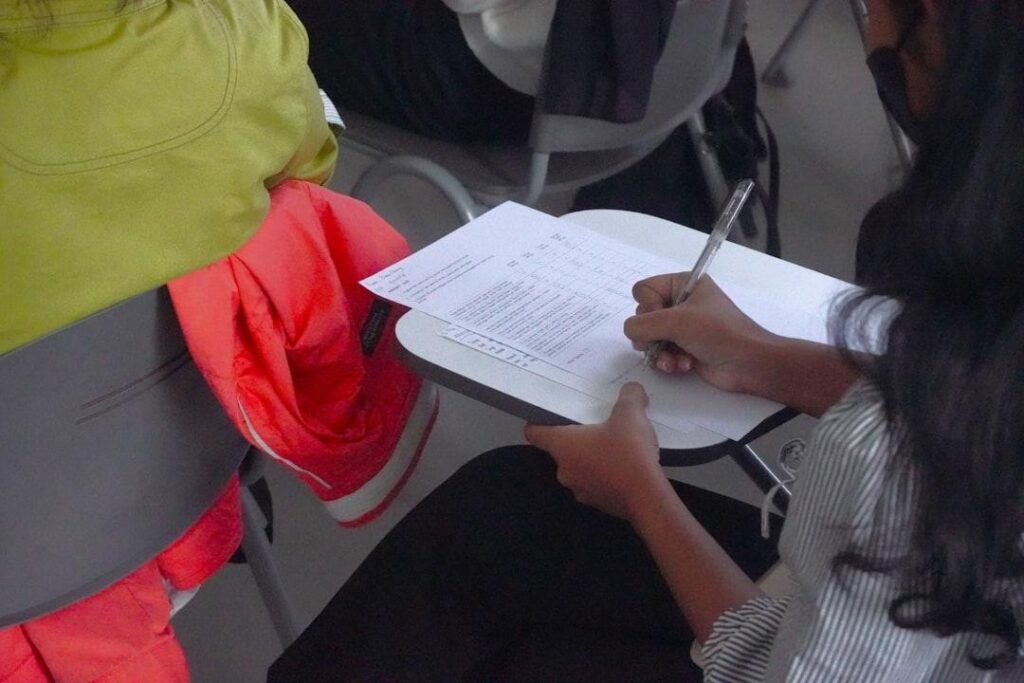
The Real Cost of Landing in Remedial Math Courses
Remedial courses carry full tuition yet earn zero college credit. You pay the same price per credit hour, but none of those credits count toward graduation.
Students placed three levels below college math face up to four extra semesters before reaching their first credit-bearing course. Only about 16% of those students complete the entire sequence within three years. The dropout rate in remedial math exceeds 70%, and just 28% of remedial students finish a degree within 8.5 years.
| Impact Area | Remedial Path | College-Level Path |
| Extra semesters | 1–4 semesters | 0 |
| Credit toward degree | None | Full credit |
| Estimated extra cost | $1,000+ in tuition | $0 |
| Completion rate | ~28% within 8.5 years | Significantly higher |
The national price tag for remedial education hovers around $7 billion annually. Low-income students and students of color bear the heaviest burden, since they land in remediation at disproportionately high rates.
Some colleges now use co-requisite models and math pathways to shorten the remedial pipeline. These reforms help, but preparation before the test remains the smartest strategy you can adopt.
How to Prepare Effectively for Your Math Placement Test
A focused study plan beats last-minute cramming every time. The key? Know what resources exist, identify your weak spots, and use test-day tactics that work in your favor.
Use Free Official Practice Resources
ACCUPLACER offers free practice tests and learning exercises directly through College Board. ALEKS provides a Prep and Learning Module after your initial assessment, letting you study specific topics and then retest for a higher score.
Many community colleges also publish their own free prep materials, online workshops, and downloadable study guides on their websites. Check your college’s testing center page before spending money on third-party resources.
Most schools allow multiple retakes, often four to five attempts with mandatory study time between each sitting. Use every attempt strategically: take the test once to identify gaps, study those gaps intensively, then retest.
Work With a Mathematics Tutor for Targeted Review
Generic self-study can help, but a mathematics tutor pinpoints your exact weaknesses and builds a focused plan around them. Maybe you’re solid on linear equations but shaky on fractions and factoring. A tutor zeroes in on those gaps instead of making you review material you already know.
Superprof stands out as a leading platform for finding qualified math tutors across the United States. With over 680,000 math tutors available, rates starting at $15 per hour, and a free first lesson with no commitment, Superprof makes expert help accessible on almost any budget. Tutors on the platform specialize in placement test prep, covering arithmetic through college algebra in personalized sessions. Online lessons offer scheduling flexibility for students juggling work, family, or other courses.
Smart Test-Day Strategies
- Get a full night of sleep. Fatigue tanks your working memory, and math placement tests demand sharp recall.
- Avoid the “I Don’t Know” button on ALEKS. Guessing gives you a chance at a correct answer, while skipping can end the test early and cap your score.
- Read each question carefully on ACCUPLACER, since it adapts in real time and you cannot go back to previous questions.
- Bring required materials (photo ID, pencils, scratch paper) and arrive at least 15 minutes early to settle in.

Why a Mathematics Tutor Is Your Best Investment Before College
One-on-one tutoring bridges the gap between high school math and college expectations. Many students carry knowledge gaps from years of passive learning, copying formulas without truly understanding them. A tutor rebuilds that foundation.
Unlike crowded classrooms, a tutor customizes every lesson to your learning style. Visual learner? Expect diagrams and color-coded steps. Hands-on? You’ll work through problems together in real time. This personalized approach accelerates progress dramatically compared to watching generic YouTube videos.
Tutoring also tackles math anxiety, a real barrier that causes capable students to freeze during timed assessments. Building confidence through repeated practice with a patient tutor translates directly into calmer, more accurate test performance.
Superprof connects students with experienced, reviewed tutors who focus specifically on placement test preparation. The platform’s average tutor rating sits at 5 out of 5 based on tens of thousands of reviews. You can compare profiles, read feedback from other students, and message tutors before booking a single session.
Here’s the bottom line: investing a few weeks of tutoring before your placement test can save semesters of remedial coursework and thousands of dollars in tuition. Few academic investments offer that kind of return.
Are There Ways to Skip the Placement Test Entirely?
Many community colleges grant exemptions based on prior academic achievements. Before scheduling your test, check whether you qualify.
Common exemptions include:
- SAT scores of 500 or higher per section
- ACT scores of 21 or higher per section
- Prior college transcripts showing completed math courses
- AP exam scores of 4 or 5 in Calculus
- High school GPA of 3.0 or above (an increasingly popular alternative in 2026)
- Transitional math courses completed during high school
Even students who qualify for an exemption should consider a quick refresher if their last math class feels like ancient history. A few sessions with a Superprof mathematics tutor can ensure you handle college-level coursework from day one, rather than struggling through a course you technically placed into but aren’t ready for.
If none of these exemptions apply, preparation becomes your best tool. The earlier you begin reviewing with a tutor, the stronger your placement outcome.
FAQ
How long should I study before taking a community college math placement test?
Most students see real improvement with two to four weeks of focused review, especially alongside a mathematics tutor who targets specific weak areas. Use the ALEKS Prep and Learning Module or ACCUPLACER practice tests to gauge your readiness before scheduling the actual exam.
Can I retake my math placement test if I score poorly?
Yes. Most community colleges allow four to five retakes over a set period, with required study time between attempts using official prep modules. Working with a Superprof mathematics tutor between sittings can significantly boost your score on the next attempt.
What is the difference between ALEKS and ACCUPLACER placement tests?
ALEKS uses adaptive questioning covering basic math through calculus (20 to 30 questions, 45 to 90 minutes) and provides a personalized learning module afterward for targeted study. ACCUPLACER, developed by College Board, also adapts to your level and includes sections on arithmetic, quantitative reasoning, and advanced algebra. Your community college’s website will specify which test they require.