

Moving abroad to teach English is one of the most exciting ways to travel long-term. You get to experience a new culture, explore incredible cities, and build a life somewhere completely different from home. But there’s one challenge almost every new teacher faces during their first few weeks abroad: food.
Whether you’re trying to save money, navigate unfamiliar grocery stores, or just avoid eating convenience store ramen every night, figuring out how to eat well in a new country can take some time. The good news? A few simple “food hacks” can make eating abroad easier, cheaper, and way more fun.
If you’re planning to teach abroad through myTEFL in places like China, Japan, or South Korea, these food tips will help you survive (and thrive) during your extended stay.
1. Learn the “Local Lunch Special” Trick
One of the easiest ways to save money abroad is by taking advantage of lunch specials. In many Asian countries, restaurants offer much cheaper lunch sets compared to dinner menus.
In Japan, for example, many restaurants offer a “teishoku” lunch set. These typically include rice, soup, pickles, and a main dish like grilled fish or pork cutlet for a very reasonable price. You’ll often pay half of what you would for the same meal at dinner.
In South Korea, look for “set menu” lunches at Korean BBQ restaurants or small neighborhood eateries. These often come with multiple banchan (side dishes), soup, rice, and a main dish like bulgogi or pork stew.
In China, lunchtime combos are everywhere. Small restaurants near schools and offices often offer quick rice bowl meals with vegetables and meat for a fraction of dinner prices.
If you’re teaching English abroad, this works perfectly with a teacher’s schedule. Many teachers finish classes mid-afternoon, making lunchtime the perfect opportunity to eat out cheaply.
2. Convenience Stores Are Your Secret Weapon

Convenience stores in East Asia are on a completely different level compared to what many people are used to back home. They’re not just for snacks—they’re often a reliable source of affordable, surprisingly good meals.
In Japan, chains like 7-Eleven, Lawson, and FamilyMart sell fresh meals like sushi, rice bowls, sandwiches, and hot noodles. Teachers in Japan quickly learn that a convenience store dinner can be both cheap and high quality.
In South Korea, convenience stores are famous for instant ramen stations, microwaveable meals, and triangle kimbap (rice wrapped in seaweed). These make perfect quick meals if you’re busy planning lessons or grading assignments.
In China, convenience stores and small street vendors often sell dumplings, buns (baozi), noodles, and rice dishes that cost just a few dollars.
While you probably won’t want to rely on convenience stores forever, they’re incredibly helpful during your first few weeks when you’re still adjusting to your new surroundings.
3. Shop at Local Markets Instead of Western Grocery Stores
One mistake many new teachers make abroad is looking for Western-style grocery stores right away. Imported foods can be surprisingly expensive.
Instead, head to local markets and neighborhood grocery stores.
In China, wet markets and small produce stalls sell fresh vegetables, tofu, noodles, and meats at much lower prices than international supermarkets. Shopping this way also gives you a chance to experience daily life in your new city.
In Japan, neighborhood grocery stores often discount fresh food in the evening. If you go shopping around 7–8 PM, you can often find sushi, bentos, and prepared meals marked down.
In South Korea, traditional markets sell fresh produce, kimchi, seafood, and street food at great prices. Many teachers find these markets much cheaper than large supermarket chains.
Even if you’re not an expert cook, buying fresh ingredients and learning a few simple meals can save you a lot of money over a long stay abroad.
4. Master a Few Simple Local Dishes
You don’t need to become a professional chef to cook abroad. Learning just three or four simple local meals can make a huge difference for your budget and comfort.
For example:
- In China, simple stir-fries with rice are easy to make and require only a few ingredients like garlic, soy sauce, and vegetables.
- In Japan, dishes like udon noodles, fried rice, or miso soup are quick and beginner-friendly.
- In South Korea, many teachers learn to make kimchi fried rice (kimchi bokkeumbap), which only requires rice, kimchi, and a few extra ingredients.
Once you know a couple of local recipes, grocery shopping becomes much easier and cooking stops feeling intimidating.
5. Use Translation Apps for Grocery Shopping

Walking into a foreign grocery store for the first time can be overwhelming. Labels might be in a language you can’t read, and ingredients might look unfamiliar.
This is where translation apps can save the day.
Apps like Google Translate allow you to use your phone camera to translate labels instantly. This makes it much easier to identify sauces, spices, and packaged foods.
This trick is especially useful in places like China and Japan, where many products may not include English labels. Within a few weeks, you’ll start recognizing your favorite ingredients without needing the app.
6. Follow the Office Worker Rule
Here’s a simple rule that works almost everywhere in the world: eat where the locals eat.
If you’re looking for affordable, high-quality food, pay attention to where office workers go during lunch.
In South Korea, small restaurants packed with local workers are usually serving authentic, affordable Korean meals.
In Japan, tiny ramen shops or curry restaurants filled with salarymen are often the best places for quick, delicious meals.
In China, busy noodle shops or dumpling spots near schools and office buildings are usually reliable and inexpensive.
If a restaurant is full of locals during lunchtime, that’s almost always a good sign.
7. Embrace Street Food (Safely)

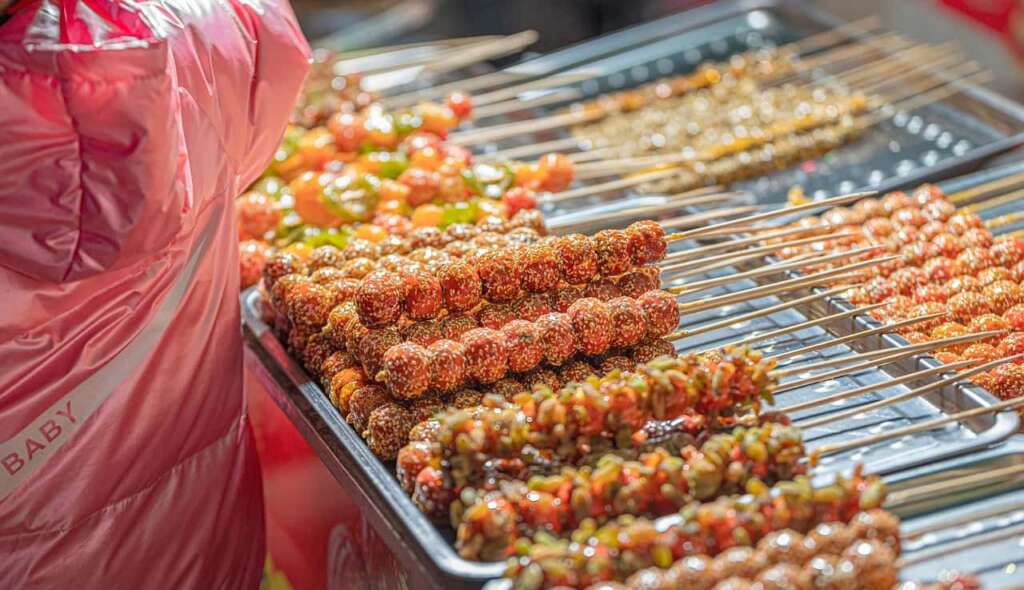
Street food is one of the best parts of living abroad, especially in Asia. It’s affordable, quick, and often incredibly delicious. Street food is one of the best parts of living abroad, especially in Asia. Cities across China, Japan, and South Korea are famous for their vibrant street food scenes, which have been highlighted in global food guides from outlets like CNN Travel.
In China, you’ll find street vendors selling jianbing (savory crepes), skewers, dumplings, and noodles.
In South Korea, popular street snacks include tteokbokki (spicy rice cakes), hotteok (sweet pancakes), and fish-shaped pastries filled with red bean paste.
In Japan, street food varies by region but often includes takoyaki (octopus balls), yakitori skewers, and festival foods.
A simple tip: choose vendors that have high turnover and lots of customers. Fresh food and busy stalls usually mean better quality and safer meals.
8. Balance Eating Out and Cooking
When you first arrive in a new country, it’s tempting to eat out all the time. After all, everything is new and exciting.
But for long-term stays, the best strategy is balance.
Try cooking a few meals at home each week while still exploring local restaurants and street food. This keeps your budget under control while still letting you experience the food culture of your new home.
Many teachers abroad find that cooking occasionally also helps when they start missing familiar flavors from home.
Teaching Abroad Means Discovering Food Too

One of the best parts of teaching English abroad is experiencing a new culture every day—and food is a huge part of that experience. From late-night ramen in Japan to dumplings in China or Korean BBQ with new friends, food quickly becomes one of the highlights of living abroad.
With a few simple food hacks, you can eat well, save money, and make the most of your time overseas.
If you’re considering teaching abroad in China, Japan, or South Korea, programs through myTEFL can help you get there and start your journey. Once you arrive, these small food strategies will help make your transition smoother—and much more delicious. 🍜✈️